Is the Cloud Running Out of Power for AI?
The artificial intelligence boom is pushing global data centers to their physical limits, creating a new bottleneck defined by electricity, land, and supply chains.
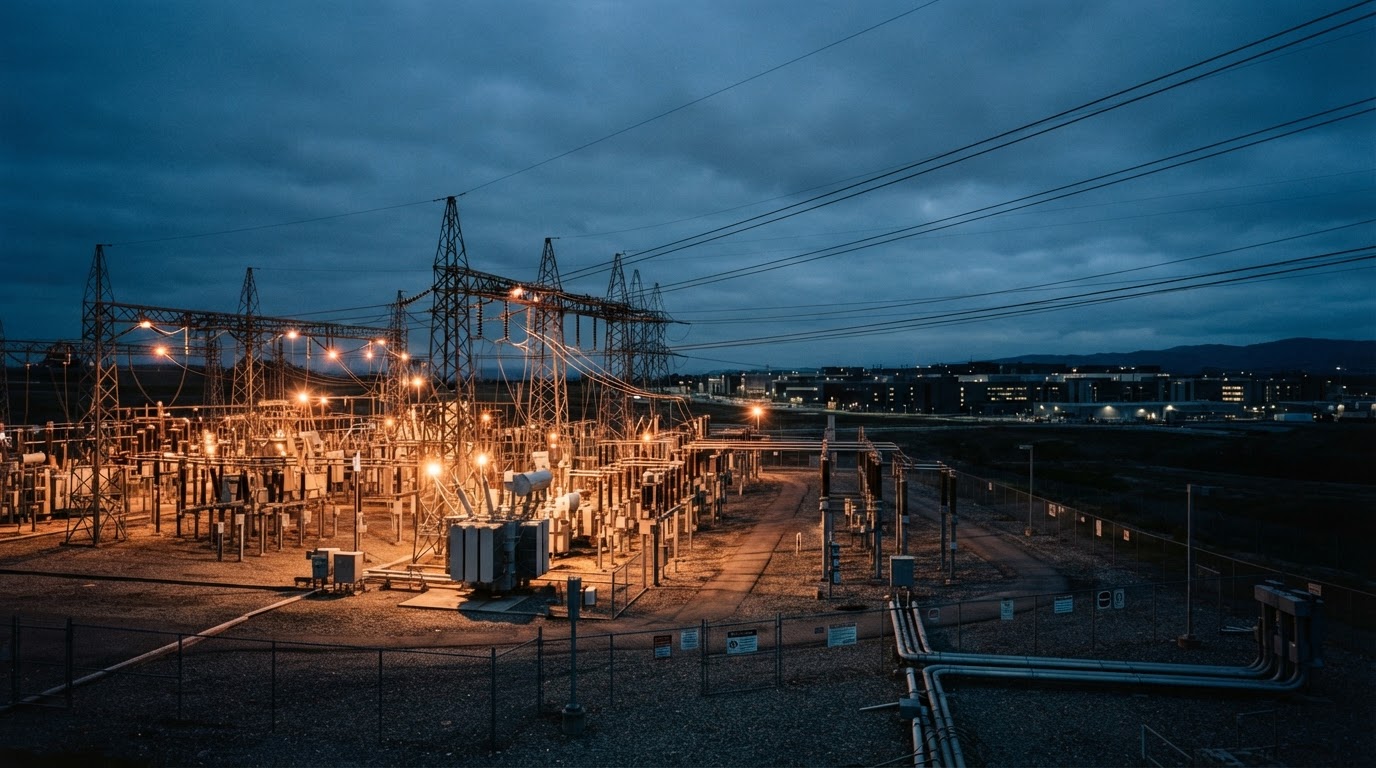
No, the cloud is not about to ‘fill up’ and disappear, but the unprecedented demand for generative AI is causing severe, localized shortages of the one resource that underpins it all: electricity. The ravenous appetite of AI models for computational power is outstripping the capacity of local power grids and the supply chains needed to build new data centers. This is creating a new bottleneck for technological progress, where the biggest constraint is no longer the silicon chip, but the physical infrastructure of power generation, transmission, and land.
What Is Driving This Unprecedented Demand for AI Cloud Power?
The primary driver is the fundamental architectural shift in computing required for modern artificial intelligence. While traditional cloud computing relies heavily on Central Processing Units (CPUs) for sequential tasks, AI workloads, particularly deep learning, are best handled by Graphics Processing Units (GPUs). A GPU is a specialized electronic circuit designed to rapidly manipulate memory to accelerate the creation of images in a frame buffer intended for output to a display device; their highly parallel structure makes them ideal for the matrix multiplication and vector processing that define neural networks.
Training a large language model (LLM) like OpenAI's GPT-4 or Google's Gemini involves processing vast datasets across thousands of GPUs running continuously for weeks or months. Each of these high-performance GPUs, such as NVIDIA’s widely-used H100, can consume over 700 watts of power under full load—roughly the same as a microwave oven. When you multiply this by the tens or hundreds of thousands of GPUs in a modern AI cluster, the power demand becomes immense, dwarfing that of traditional data centers. For instance, Meta's CEO Mark Zuckerberg has stated a goal of acquiring 350,000 NVIDIA H100 GPUs by the end of 2024, which alone could represent a peak power draw of over 245 megawatts (MW), enough to power a quarter of a million homes.
How Much More Electricity Does AI Really Consume?
AI's energy consumption is staggering and projected to grow exponentially. According to the International Energy Agency (IEA), the world's data centers consumed an estimated 460 terawatt-hours (TWh) in 2022. The IEA projects this figure could surge to over 1,000 TWh by 2026 in a high-growth scenario, a demand roughly equivalent to the entire electricity consumption of Japan. Much of this increase is directly attributable to AI and cryptocurrency mining.
This demand isn't just about the chips themselves. For every watt of power a GPU uses, another watt (or more) is often needed for cooling systems to prevent the servers from overheating. This relationship is measured by a metric called Power Usage Effectiveness (PUE), where a perfect score of 1.0 means all energy goes to computing. While modern hyperscale data centers achieve impressive PUEs of 1.1 to 1.2, the sheer density of AI hardware means overall energy use is still colossal. Boston Consulting Group estimates that by 2030, data centers in the U.S. alone will consume 7.5% of the country's total electricity, up from 2.5% in 2022, with AI as the main culprit.
Projected Global Data Center Electricity Consumption
Why Can't Companies Just Build More Data Centers?
The challenge is that building a hyperscale data center is a slow, capital-intensive process fraught with physical-world constraints. Amazon, Google, and Microsoft are collectively spending tens of billions of dollars per quarter on cloud infrastructure, but money can't solve every problem. The lead times for securing suitable land, getting zoning permits, and, most critically, connecting to the power grid are stretching longer and longer.
In established data center hubs like Northern Virginia's "Data Center Alley" or Dublin, Ireland, utilities are warning that they have little to no new capacity to offer. A new hyperscale data center might require a 100 MW connection, but the wait time to get approval and for the utility to build the necessary substations can be three to five years, and in some cases even longer. This has sparked a global race for land parcels that come with pre-approved power access, pushing prices to record highs.
- Grid Connection Delays:Waiting for local utilities to build new substations and approve high-capacity power connections can take several years.
- Land Scarcity:Competition for large, flat plots of land near power and fiber-optic infrastructure is intense, driving up costs and causing shortages.
- Supply Chain Bottlenecks:Long lead times of 1-2 years for critical hardware like high-voltage transformers and switchgear are delaying project completion.
- Regulatory Hurdles:Navigating complex local zoning laws, environmental impact assessments, and community opposition can add years to a project's timeline.
- Water Access:Data centers require significant water for cooling, a growing concern in water-stressed regions that can lead to permit denials.
“We are now in a market where the value of a piece of land is defined less by its location and more by its available megawatts. Power is the new currency of the digital age.”
Who Are the Main Players Navigating This Challenge?
The primary players are the cloud 'hyperscalers': Amazon Web Services (AWS), Microsoft Azure, and Google Cloud. These three companies dominate the cloud market and are engaged in an arms race to secure power and build out capacity for their AI services. Their quarterly capital expenditures, a proxy for infrastructure investment, have surged into the tens of billions of dollars each.
These giants are adopting aggressive strategies. They are signing power purchase agreements (PPAs) directly with renewable energy developers, funding grid upgrades themselves, and even exploring novel power sources. Microsoft, for example, has a high-profile deal with fusion energy startup Helion to purchase electricity from its first fusion power plant, planned for 2028. Outside the big three, other major tech companies like Meta and Oracle are also investing heavily in their own private AI infrastructure to reduce their reliance on the traditional cloud providers and gain a competitive edge.
| Company | Estimated 2024 Capex (USD) | Primary Focus Area |
|---|---|---|
| Microsoft (Azure) | $54-56 Billion | Expanding AI infrastructure and global data center footprint. |
| Google (Cloud) | ~$48 Billion | Building out capacity for AI models and search; custom TPU chips. |
| Amazon (AWS) | ~$45 Billion | Maintaining cloud leadership and expanding AI services. |
| Meta Platforms | ~$35-40 Billion | Building massive, bespoke AI infrastructure for the metaverse and Llama models. |
What Are the Potential Solutions on the Horizon?
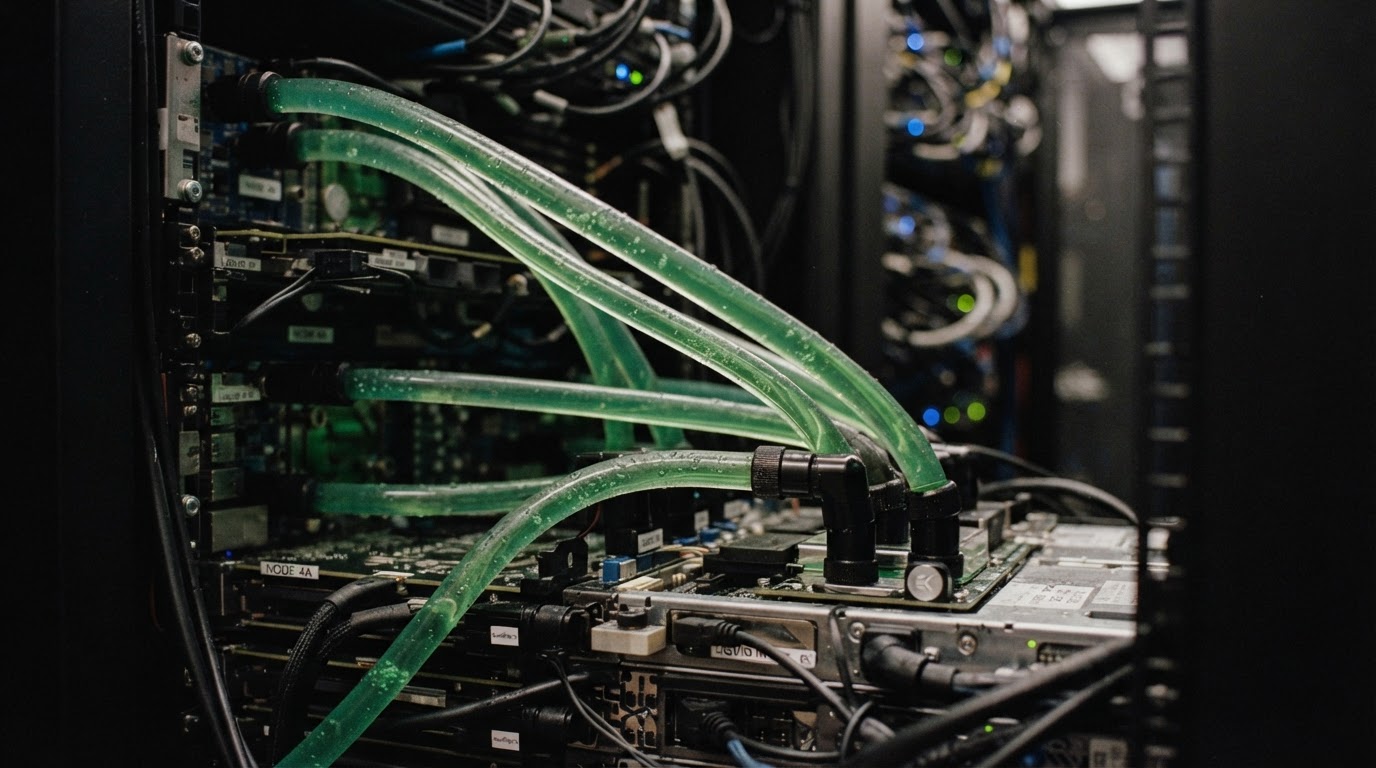
The industry is tackling the AI cloud power crunch from multiple angles, combining technological innovation with new infrastructure strategies. On the hardware front, a major focus is on managing heat. As air cooling reaches its physical limits with densely packed GPUs, liquid cooling—circulating fluid directly over hot components—is moving from a niche solution to a mainstream requirement for high-performance AI clusters. It is significantly more efficient at removing heat, allowing for greater server density.
Beyond cooling, a portfolio of diverse strategies is emerging. This includes designing more power-efficient chips, using AI itself to optimize data center power and cooling in real-time, and fundamentally rethinking where and how data centers are built. The era of concentrating data centers in a few key valleys is giving way to a more distributed model, placing them closer to power sources to minimize transmission losses and gridlock. Regulators are also beginning to respond, with bodies like the U.S. Federal Energy Regulatory Commission (FERC) issuing orders to streamline the grid interconnection process, though the impact of these changes will take time to materialize.
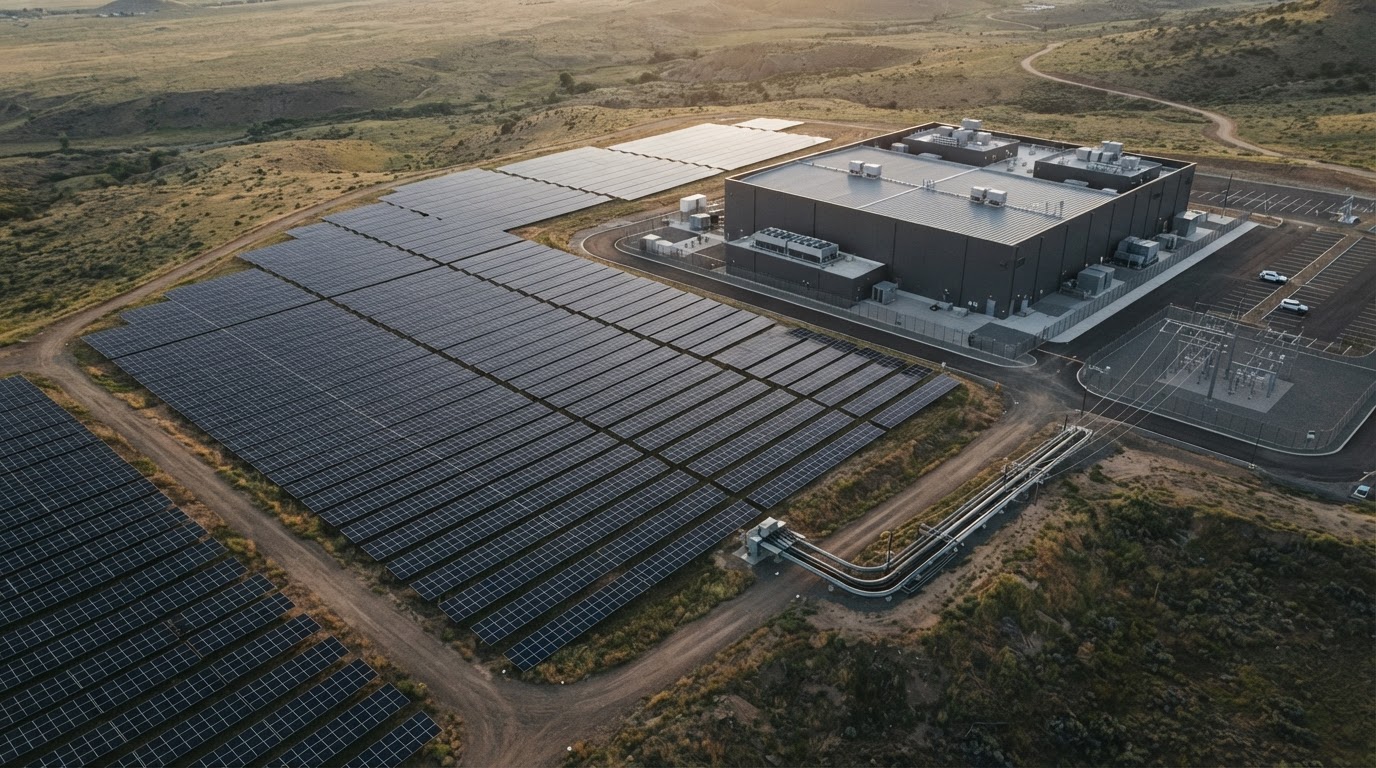
- Co-locating with Power:Building data centers directly beside power plants, including renewables like solar and wind farms, to bypass grid congestion.
- Advanced Cooling:Deploying direct liquid cooling and immersion cooling to handle the extreme heat density of modern AI servers.
- Next-Gen Energy Sources:Investing in future technologies like small modular reactors (SMRs) and nuclear fusion to provide clean, constant, high-density power.
- Software Optimization:Using AI-powered software to dynamically manage workloads and optimize energy consumption across entire data center fleets.
- Sovereign AI Clouds:Governments like South Korea and the UK investing in national computing infrastructure to guarantee access and spur local innovation.
Frequently Asked Questions
Will AI make my cloud computing bill more expensive?
Yes, almost certainly. AI-specialized hardware like GPUs is significantly more expensive to rent than general-purpose CPUs. As the demand for power and specialized infrastructure drives up costs for cloud providers, some of these expenses will likely be passed on to customers through higher prices for AI and machine learning services.
Are data centers bad for the environment?
Data centers have a significant environmental footprint due to their massive electricity and water consumption. However, major cloud providers are also the largest corporate buyers of renewable energy globally. While their overall consumption is rising, they are actively funding the transition to green energy through Power Purchase Agreements to mitigate their carbon impact.
Can my business run out of cloud computing resources for AI?
Yes, it is possible to face temporary shortages. During periods of peak demand, you may find that specific types of high-performance GPUs are unavailable in your preferred cloud region. Cloud providers use a reservation and spot-instance system, and securing large amounts of capacity for a major AI training job often requires significant advance planning and booking.
What is the difference between a GPU and a CPU for AI?
A CPU (Central Processing Unit) is designed for general-purpose, sequential tasks and is the 'brain' of a traditional computer. A GPU (Graphics Processing Unit) has a highly parallel architecture with thousands of smaller cores, making it exceptionally efficient at performing the same operation simultaneously across large datasets, which is the core of modern AI calculations.
Which cloud provider is best for AI workloads?
There is no single 'best' provider, as the choice depends on specific needs. AWS offers the broadest range of services, Microsoft Azure has strong enterprise integration and a close partnership with OpenAI, and Google Cloud is known for its powerful custom AI chips (TPUs) and leadership in AI research. All three are investing heavily and offer competitive, cutting-edge AI platforms.
Reactions