Open-Weight vs. Closed AI Models for High-Income Professionals: A Sustainability Review
We review the sustainability implications of open-weight versus closed AI models, guiding high-income professionals on responsible technology adoption and investment.

For high-income professionals navigating the intricate landscape of artificial intelligence, understanding the fundamental differences between open-weight and closed AI models, particularly through a sustainability and ethical lens, is paramount. This review evaluates these two paradigms, focusing on their environmental, social, and governance (ESG) impacts, and offers insights into how choices in AI adoption and investment can align with responsible business practices. While closed models offer proprietary performance and support, open-weight alternatives foster transparency, collaborative innovation, and potentially more equitable access, challenging professionals to weigh immediate utility against long-term societal and environmental responsibilities.
The advent of generative AI has presented a unique dilemma for enterprises and investors. Large language models (LLMs) like OpenAI’s GPT series and Google's Gemini have demonstrated unprecedented capabilities, but their underlying architectures are often opaque. Conversely, models such as Meta's Llama 2 and Falcon have been released with their 'weights'—the learned parameters that define their behaviour—publicly accessible, allowing for community scrutiny and modification. This distinction, 'open-weight' versus 'closed,' is not merely technical; it carries profound implications for sustainability, ethical governance, and the very future of digital economies.
Review Scorecard: Open-Weight vs. Closed AI Models for Sustainability
Our review assesses the two model types across critical sustainability and governance criteria relevant to high-income professionals who are often decision-makers or influential investors in technology. We consider factors like transparency, environmental footprint, equitable access, and long-term societal impact.
| Criterion | Open-Weight Models Rating | Closed Models Rating | Notes |
|---|---|---|---|
| Transparency & Explainability | Excellent (A) | Poor (D) | Open weights allow full auditability; closed models are black boxes. |
| Environmental Impact (Energy) | Good (B) | Fair (C) | Shared development reduces redundant training, but deployment can still be energy intensive. |
| Ethical Governance & Bias Mitigation | Good (B) | Fair (C) | Community scrutiny aids bias detection; internal reviews in closed systems lack external validation. |
| Equitable Access & Innovation | Excellent (A) | Poor (D) | Reduces barriers to entry for smaller firms and researchers globally, e.g., in India or Brazil. |
| Security & Risk Management | Fair (C) | Good (B) | Openness can introduce vulnerabilities, though rapid community patching is a strength. Closed systems have dedicated security teams. |

Understanding the Paradigms: Open-Weight vs. Closed
An 'open-weight' AI model refers to a system where the vast collection of numerical parameters (weights) that allow it to perform tasks are publicly available. This doesn't necessarily mean the entire development pipeline or training data is open, but the core 'brain' of the model is accessible. This transparency allows researchers, developers, and even regulators to inspect, understand, and fine-tune the model's behaviour. For instance, models like Hugging Face's offerings provide a robust ecosystem for open-weight models.
Conversely, a 'closed' or 'proprietary' AI model keeps its weights, architecture, and often its training data under strict commercial lock and key. Users interact with these models via an API (Application Programming Interface), never directly accessing the underlying code. Companies like Google and Microsoft, through their respective AI subsidiaries, predominantly offer closed models, citing competitive advantage, intellectual property protection, and controlled deployment as key reasons. The global AI market is projected to reach over USD 1.8 trillion by 2030, with both model types contributing significantly.
“Transparency in AI is not just a moral imperative; it's a foundational element for building trustworthy systems that can genuinely contribute to a sustainable future.”
Pros of Open-Weight AI Models for Sustainable Practices
- Enhanced Transparency & Auditability:Publicly accessible weights allow for independent verification of biases, safety, and performance, crucial for ethical AI governance and regulatory compliance, particularly under frameworks like the EU AI Act.
- Fosters Innovation & Collaboration:Democratises access to powerful AI tools, enabling startups, researchers, and developers globally to build upon existing models without prohibitive licensing costs, driving diverse solutions for sustainability challenges.
- Reduced Redundant Compute:Rather than multiple entities separately training vast, energy-intensive models from scratch, open-weight models allow for fine-tuning, significantly cutting down on overall carbon footprint from compute cycles.
- Community-Driven Security & Patching:A large community can rapidly identify and address vulnerabilities, similar to open-source software, potentially making systems more resilient against malicious attacks or unintended behaviours.
- Increased Accountability:The public nature of the models encourages developers to be more responsible in their design and deployment, knowing their work will be scrutinised by a global peer network.
Cons of Open-Weight AI Models for Sustainable Practices
- Potential for Misuse:The accessibility of powerful models means they can be more easily adapted for nefarious purposes, such as generating misinformation or developing autonomous weapons, posing significant ethical risks.
- Security Vulnerabilities:While community-driven, the very transparency that allows auditing can also expose potential vulnerabilities to bad actors if not managed carefully, requiring robust security protocols from adopters.
- Resource Intensity for Fine-tuning:While base training is shared, fine-tuning and deployment for specific applications still require considerable computational resources, which can be a barrier for smaller organisations or contribute to energy consumption.
- Lack of Centralised Governance:The decentralised nature can make it challenging to enforce consistent ethical guidelines or respond swiftly to emergent risks, unlike a single entity managing a closed model.
- Support & Maintenance Challenges:Unlike commercially backed closed models, open-weight solutions might lack dedicated enterprise-level support, requiring internal expertise or reliance on community channels for troubleshooting and updates.

Pros of Closed AI Models for Sustainable Practices
- Optimised Performance & Control:Proprietary models are often highly optimised for specific tasks, offering superior performance and the ability for providers to directly control their behaviour and safety features, reducing immediate risks.
- Dedicated Support & Compliance:Companies like Google and Microsoft offer robust enterprise-level support, service level agreements (SLAs), and often ensure compliance with data privacy regulations like GDPR, simplifying adoption for large corporations.
- Enhanced Security Measures:Closed systems often feature dedicated security teams implementing advanced measures against cyber threats and intellectual property theft, which can be reassuring for sensitive applications in finance or healthcare.
- Clearer Commercial Roadmaps:Providers typically have well-defined product roadmaps, offering stability and predictability for businesses integrating these solutions into their long-term strategies and investments.
Cons of Closed AI Models for Sustainable Practices
- Lack of Transparency ('Black Box'):The inability to inspect internal workings makes it difficult to verify ethical behaviour, detect biases, or understand decision-making processes, hindering accountability and trust, as highlighted by numerous civil society groups.
- Higher Costs & Vendor Lock-in:Reliance on proprietary APIs can lead to significant ongoing costs and vendor lock-in, limiting flexibility and potentially stifling competitive innovation within an ecosystem.
- Potentially Higher Aggregate Carbon Footprint:If many companies separately train similar closed models, the cumulative energy consumption for foundational model development could be substantially higher than a shared, open-weight approach.
- Limited Customisation & Flexibility:Users are constrained by the provider's offerings, making it challenging to tailor models precisely for unique, niche applications that might be critical for specific sustainability initiatives.
Investment in AI Ethics & Sustainability Initiatives (Global, 2022-2026)
Final Verdict: Balancing Innovation with Responsibility
For high-income professionals and the organisations they lead, the choice between open-weight and closed AI models is a strategic decision with far-reaching consequences beyond immediate operational efficiency. The current trajectory suggests a growing demand for transparency and accountability in AI, driven by public sentiment, regulatory pressure (such as the UK's proposed AI regulation), and investor expectations for strong ESG performance. While closed models from tech giants like Google and Meta will continue to dominate certain market segments due to their performance and proprietary data advantages, the momentum behind open-weight models, championed by organisations like Stability AI and EleutherAI, is undeniable.
The 'just transition' in AI development, much like in energy, hinges on ensuring that the benefits of technological advancement are broadly shared and that potential harms are mitigated. This requires active participation from high-income professionals—as investors, policymakers, and innovators—to steer the industry towards practices that prioritize collective well-being over narrow commercial gains. Embracing open-weight models or demanding open-science principles from closed-model providers is a crucial step towards building an AI future that is not only intelligent but also equitable and sustainable.
Frequently asked questions
What are open-weight AI models?
Open-weight AI models are artificial intelligence systems where the trained parameters, or 'weights,' are publicly accessible. This allows anyone to download, inspect, and modify the core components of the model, fostering transparency and collaborative development. Examples include Meta's Llama series and various models hosted on Hugging Face.
How do closed AI models differ in terms of ethics?
Closed AI models, such as those from OpenAI or Google, keep their internal workings proprietary, meaning their ethical behaviour and biases are difficult for external parties to verify. This 'black box' nature can hinder independent audits and reduce accountability, making it harder to ensure alignment with public ethical standards or detect subtle biases in decision-making.
What is the environmental impact of AI model choice?
The choice between open-weight and closed AI models can influence environmental impact primarily through computational resource use. Open-weight models can reduce the aggregate carbon footprint by allowing fine-tuning instead of redundant full-scale training by many entities. However, deploying either type of model still requires energy, making efficient infrastructure critical.
Why should high-income professionals care about AI model transparency?
High-income professionals should prioritise AI model transparency because it underpins trust, reduces regulatory risk, and enables better governance. Transparent models allow for thorough due diligence, reveal potential biases that could lead to reputational damage or legal challenges, and support investment in truly ethical and sustainable technology solutions.
Are open-weight models more secure than closed models?
Neither open-weight nor closed models are inherently more secure; rather, their security profiles differ. Open-weight models benefit from community-driven vulnerability detection and rapid patching but can be more susceptible to misuse due to accessibility. Closed models rely on dedicated internal security teams but lack external scrutiny, potentially leaving undetected vulnerabilities.
Reactions
Related Reading

On-Chain Finance Beyond Speculation: A Contrarian Bet on Sustainability?
Despite persistent concerns, a deeper dive reveals how on-chain finance might offer a surprising, albeit nascent, pathway to enhanced transparency and sustainable practices.
8 min read
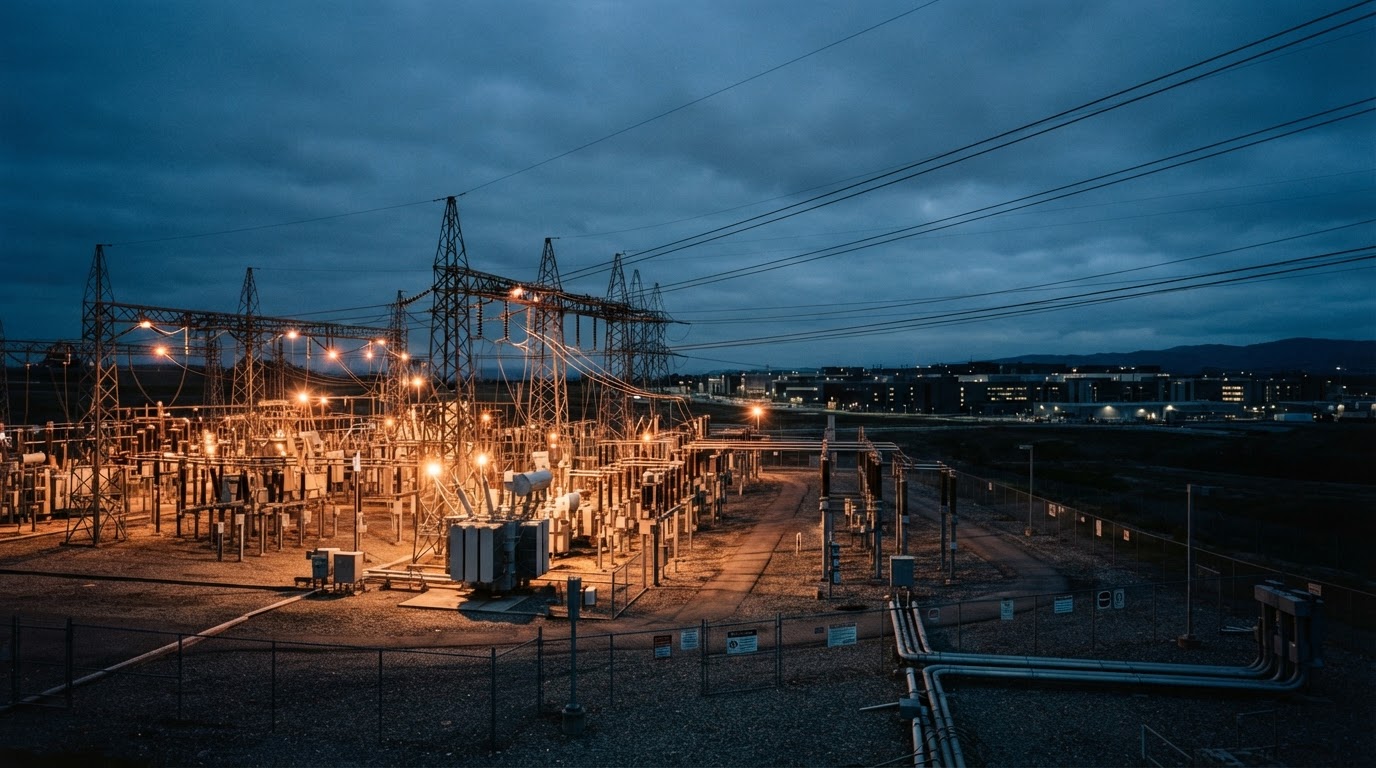
Is the Cloud Running Out of Power for AI?
The artificial intelligence boom is pushing global data centers to their physical limits, creating a new bottleneck defined by electricity, land, and supply chains.
8 min read
Featured Analysis

Navigating IPO Lock-Up Expirations as a Single Parent Investor: A Regulatory Brief
8 min read

Busting 5 AI-Era Myths About Founder Equity Splits & Sustainability
7 min read

7 Common Mistakes in Options Flow & Gamma Exposure Trading
14 min read

The Complete Guide to Quiet Quitting: What It Is and Why It Matters in 2026
8 min read